How Many Hinges Per Cabinet Door? Hinge Count by Height, Width and Weight
- Category
- Cabinet Hinges
- Published
- Reading time
- 7 min read
Overview
Most cabinet doors need two hinges if they are up to about 900 mm tall, three hinges up to about 1600 mm, four hinges up to about 2000 mm and five hinges up to about 2400 mm. This is the widely used industry rule of thumb for concealed cabinet hinges, and it assumes a door of normal weight and width. If the shutter is unusually wide, heavy or fitted with a mirror or glass, add one hinge beyond what the height alone suggests.
Below, we explain how many hinges per cabinet door you need for kitchen shutters, wardrobes and tall units, where to place them, and what to check before you buy.
How many hinges per cabinet door: the quick answer
Start with door height. Concealed hinge makers commonly publish hinge-count charts on their technical sheets that work this way, with height as the first step and weight as the second. A practical version looks like this:
- Up to about 900 mm tall: 2 hinges. Covers most kitchen base shutters and wall unit shutters.
- About 900 mm to 1600 mm: 3 hinges. Covers half-height wardrobe lofts, crockery units and taller bathroom cabinets.
- About 1600 mm to 2000 mm: 4 hinges. Covers many wardrobe shutters and pantry units.
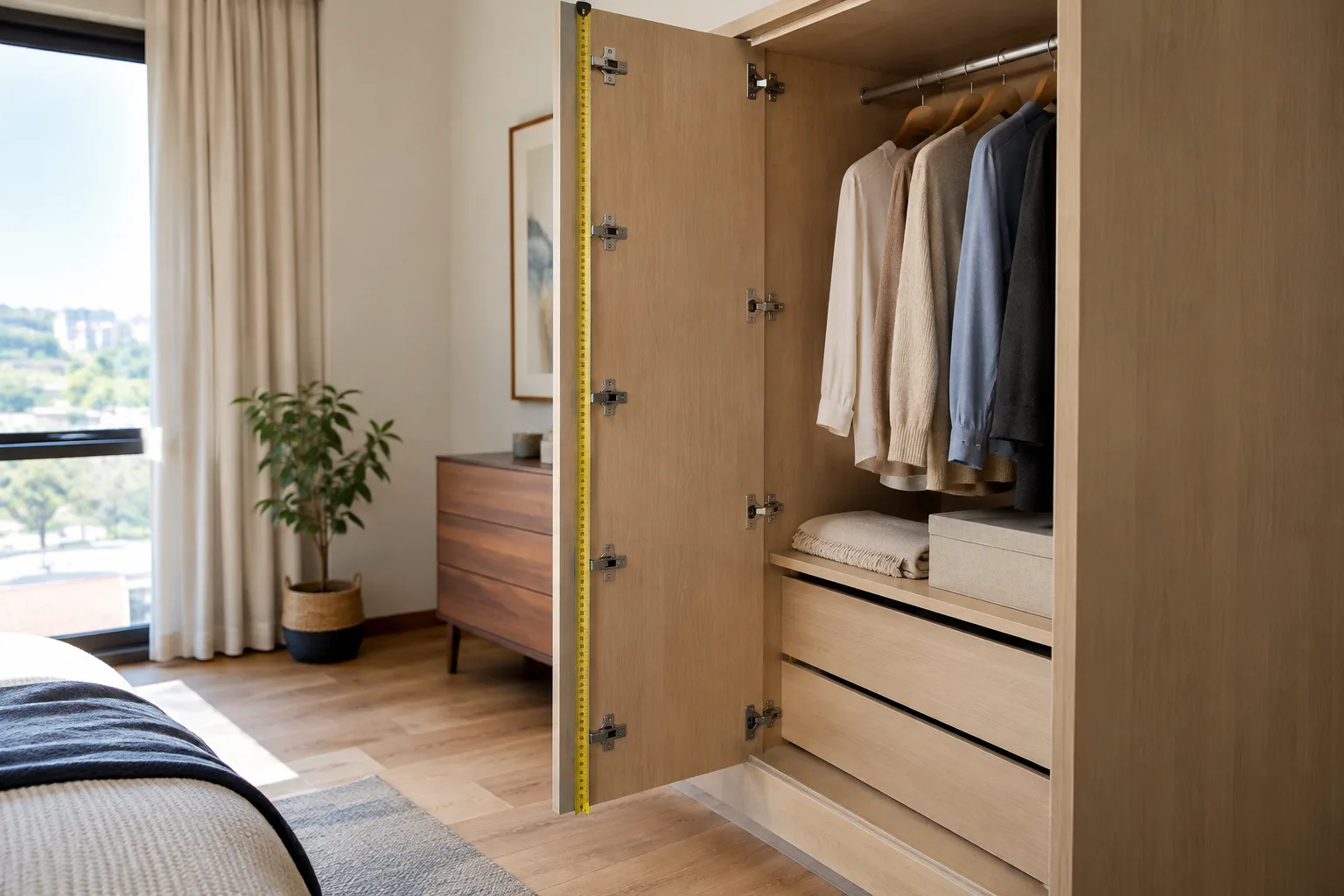
- About 2000 mm to 2400 mm: 5 hinges. Covers full-height wardrobes and floor-to-ceiling tall units.
Treat these as a starting point, not a fixed rule. The final count depends on the width of the door, the board material, any mirror or glass fitted to it, and the specific hinge you use. Where the hinge manufacturer gives its own chart, follow that chart.
Why door height is the starting point
A cabinet door hangs from one side, so every hinge carries part of its weight and resists the pull that tries to drag the free edge downward. On a short door, two hinges spread that load well. As the door gets taller, the distance between the top and bottom hinge grows, and the middle of the door has nothing holding it.
That unsupported middle is where problems show up. Tall shutters in plywood or MDF can bow slightly over time, especially with seasonal humidity changes. An extra hinge in the middle keeps the door flatter and the gap along the edge even. It also shares the load, so each hinge works less hard and adjustments hold better.
When door width and weight change the count
Door width
A wider door places its weight further away from the hinges. That extra leverage pulls harder on the top hinge in particular. For wide shutters, add one hinge to the height-based count, or consider splitting the opening into two narrower doors. Two narrower shutters usually look neater, open more easily in tight kitchens and put less strain on the cabinet door hinges.
Door weight and material
Weight matters as much as size. These door types usually need one more hinge than a plain shutter of the same height:
- Thick plywood shutters with laminate or veneer on both faces
- Shutters with a full-length mirror fixed on the inside or outside
- Glass-panel shutters set in an aluminium or wooden frame
- Solid wood shutters, or doors with heavy handles or profile handles along the full length
LUMA does not suggest a weight figure per hinge without test data for the specific product. If a door is heavy for its size, the safe choice is simply to add a hinge.
Hinge count for common furniture in Indian homes
Kitchen base and wall shutters
Standard modular kitchen base shutters and overhead wall shutters are usually well under 900 mm tall, so two hinges are enough. The exception is a tall wall unit that runs up to the ceiling, which often needs three. If you are planning a full kitchen, it is worth checking the drawers too. Our guide on why kitchen drawers sag or jam covers that side of the job.
Wardrobe shutters
Wardrobes are where hinge count matters most. A typical full-height wardrobe shutter of around 2100 mm needs five hinges. A wardrobe shutter with a separate loft above may be closer to 1800 mm, which usually needs four. Mirror shutters on wardrobes should get the extra hinge every time.
Tall units and pantry units
Tall kitchen pantry units, broom units and utility cabinets often run 1800 mm to 2100 mm. Plan for four or five hinges, and check that the hinge positions do not clash with internal shelves or pull-out baskets.
Where to place the hinges on a cabinet door
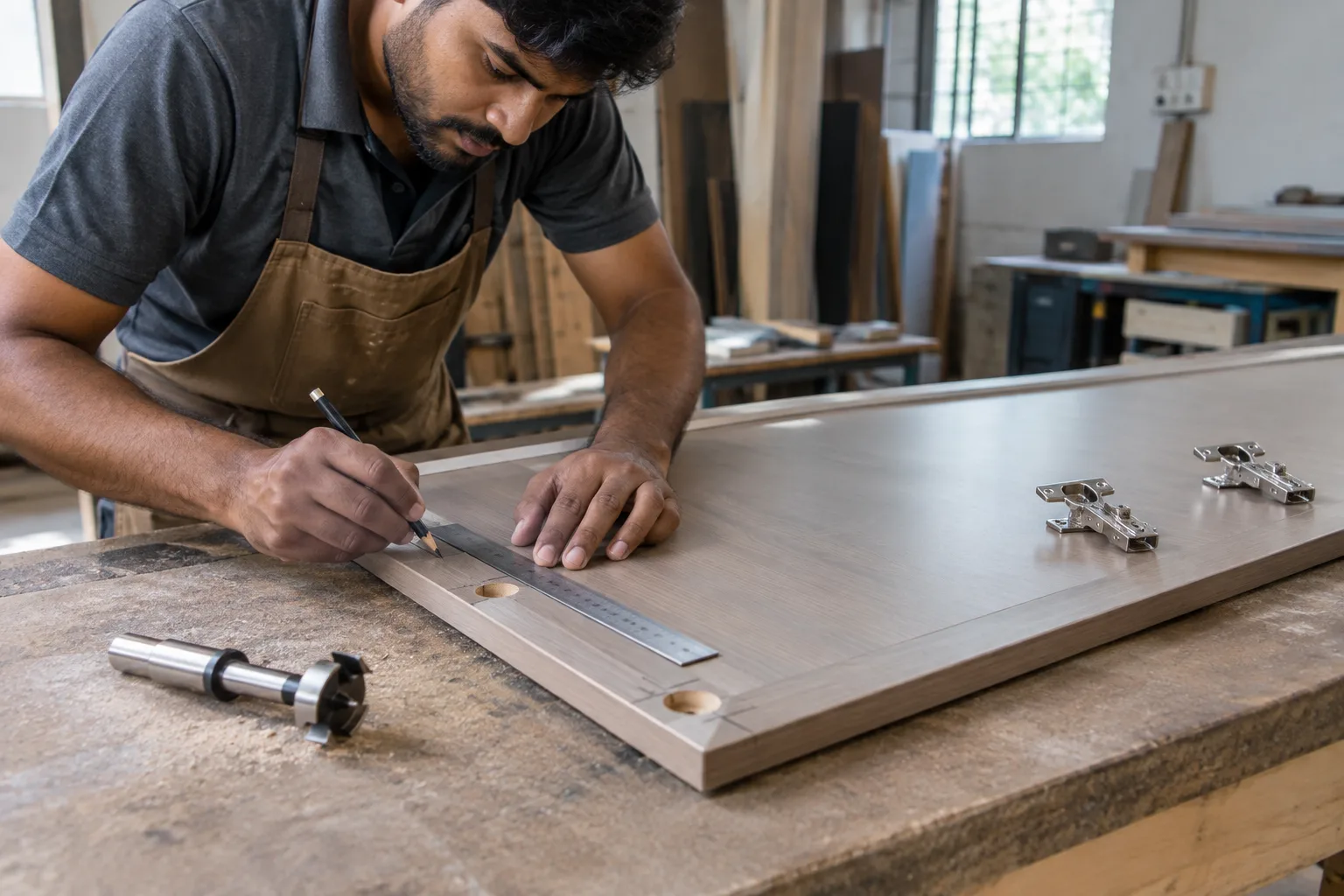
Correct placement is as important as correct count. Follow this simple sequence:
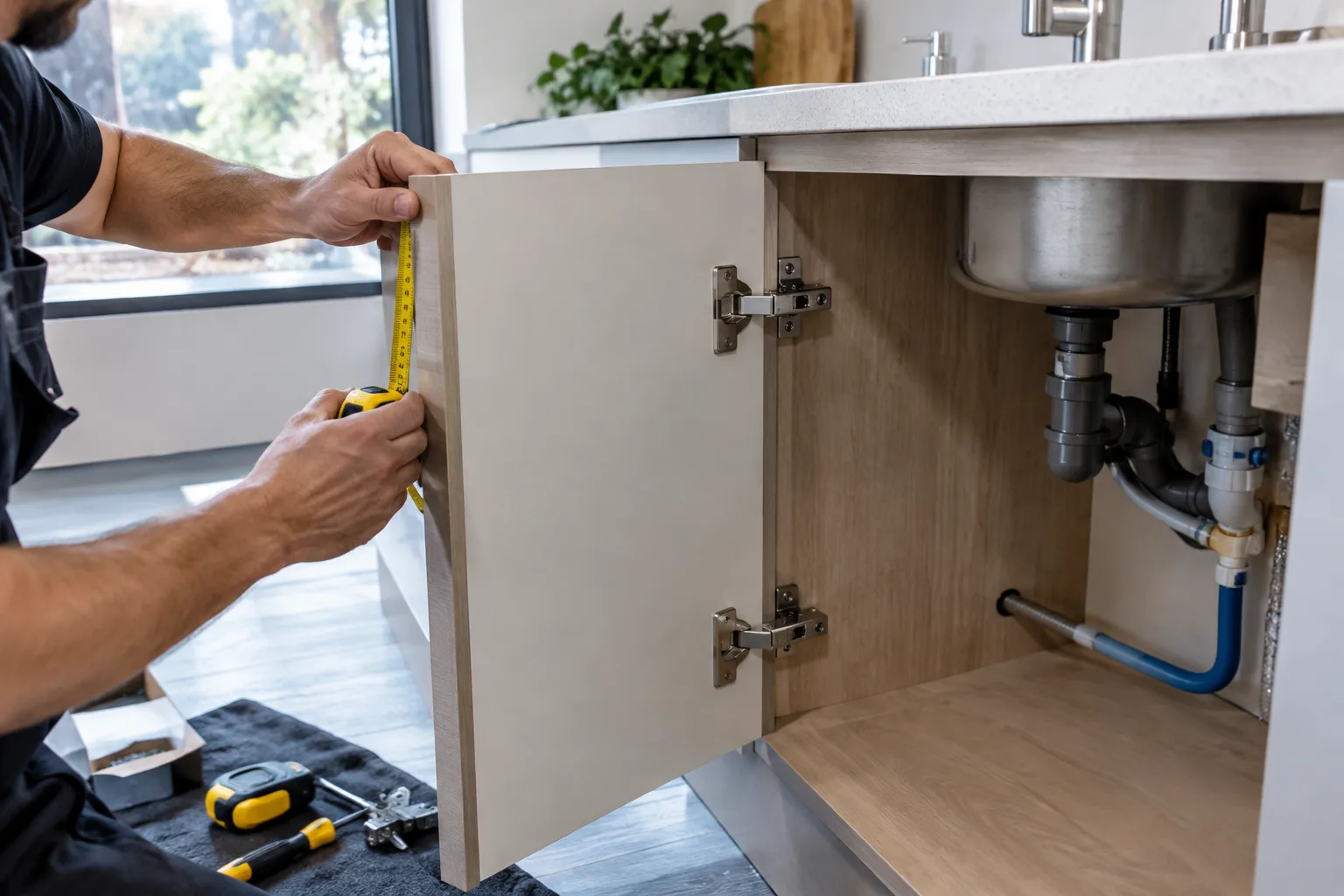
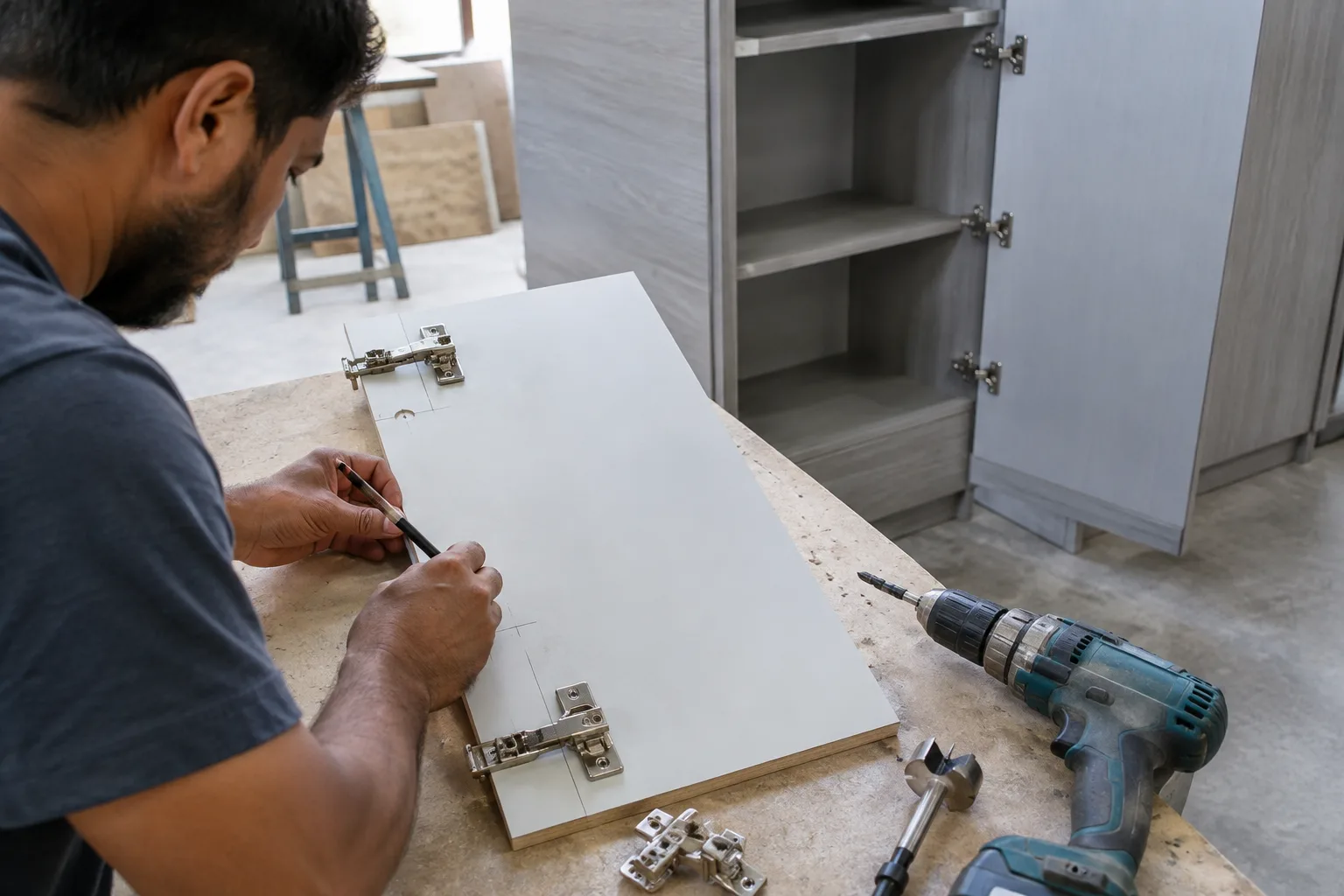
- Mark the top and bottom hinges first. Roughly 80 to 100 mm from the top and bottom edges of the door is a common starting point.
- Space the middle hinges evenly between the top and bottom hinges.
- Check for clashes with fixed shelves, drawers, baskets and internal partitions. Move a hinge slightly if needed, but keep the spacing reasonably even.
- Bore the cup holes accurately. Most concealed furniture cabinet hinges use a 35 mm cup, which is the common industry size, bored at a set distance from the door edge as given in the product specifications.
- Use the right screws. Short, correctly sized screws hold the hinge cup and mounting plate firmly without breaking through the face of the board. Our guide on choosing screws for stronger furniture explains how to pick them.
As our own hardware selection guide puts it, "Choosing the right hinge starts with understanding the door type, dimensions and installation requirements." Getting count and placement right at the start saves repeated adjustment later.
Choosing the right hinge for each door
Once you know how many hinges per cabinet door, choose the hinge itself. Three questions decide it:
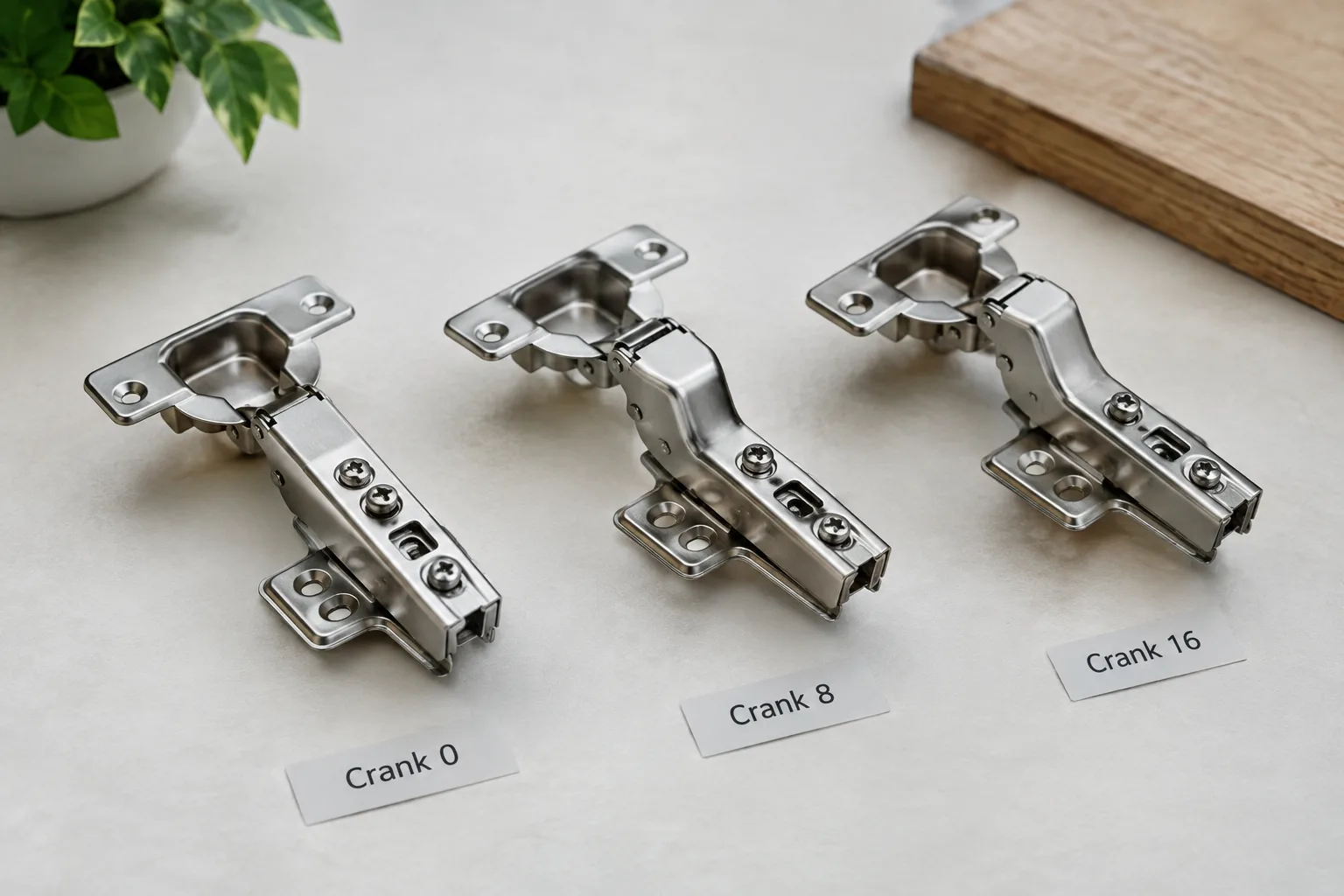
- Overlay type: full overlay (door covers the cabinet side), half overlay (two doors share one partition) or inset (door sits inside the frame). Each needs a different crank on the hinge arm.
- Opening angle: standard angles suit most shutters, while corner units and doors next to walls may need a different angle.
- Closing action: regular, self-close or soft-close. On a light door, using a soft-close damper on every hinge can make the door close too slowly, so follow the hinge maker's guidance on how many damped hinges to use.
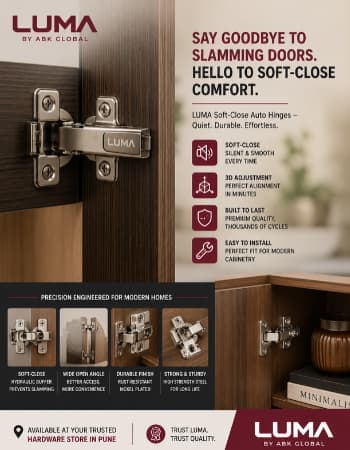
LUMA's MS regular, MS soft-close and SS soft-close auto hinges cover common kitchen and wardrobe applications. If you are deciding between closing actions, read our easy guide to soft-close cabinet hinges. You can also browse the full range of cabinet hinges and door hinges from LUMA Hardware to compare types and finishes.
A quick checklist before you buy cabinet hinge fittings
Whether you are a carpenter in Wakad, a modular furniture workshop in Bhosari MIDC or a homeowner planning a wardrobe in Kharadi, take these details to your hardware retailer:
- Height, width and thickness of each door
- Door material, and whether it carries a mirror, glass or heavy handle
- Overlay type: full, half or inset
- Preferred closing action: regular or soft-close
- Material and finish: mild steel for general interior use, stainless steel where moisture is a concern, such as near a kitchen sink
- Total number of doors, so you can buy the right quantity of hinges and screws in one visit
With these details, a retailer can recommend the right cabinet hinges for furniture quickly and accurately. Retailers in Pune who want to stock LUMA hinges, and buyers looking for a LUMA retailer near them, can contact LUMA Hardware for product details and availability.
Frequently asked questions
How many hinges does a 7 ft wardrobe door need?
A 7 ft wardrobe door is about 2100 mm tall, which usually needs five hinges. If the shutter carries a mirror or is unusually wide, five hinges with careful even spacing is the minimum. Always check the hinge manufacturer's chart for the specific hinge you are using.
Are two hinges enough for a kitchen cabinet door?
Yes, for most kitchen base and wall shutters. These are usually well under 900 mm tall, and two concealed hinges support them properly. Tall wall units or pantry shutters need three to five hinges depending on height and weight.
Can I add an extra hinge to a door that is sagging?
Often, yes. Adding a middle hinge shares the load and can reduce sagging, especially on tall or heavy shutters. First check that the existing hinges are tight and correctly adjusted, and that the screws are holding firmly in the board.
Should every hinge on a door be soft-close?
Not always. On light doors, a soft-close damper on every hinge can make the door close too slowly or stop before it shuts. Follow the hinge maker's guidance, which may suggest mixing soft-close and regular hinges on smaller doors.
How far from the edge should cabinet hinges be placed?
A common starting point is roughly 80 to 100 mm from the top and bottom edges of the door. Any middle hinges are then spaced evenly between them. Adjust slightly to avoid clashing with shelves, drawers or internal fittings.