Door Hardware Kit for New Flat: How Many Kits Do 1BHK, 2BHK and 3BHK Homes Need?
- Category
- Drawer Hardware
- Published
- Reading time
- 6 min read
Overview
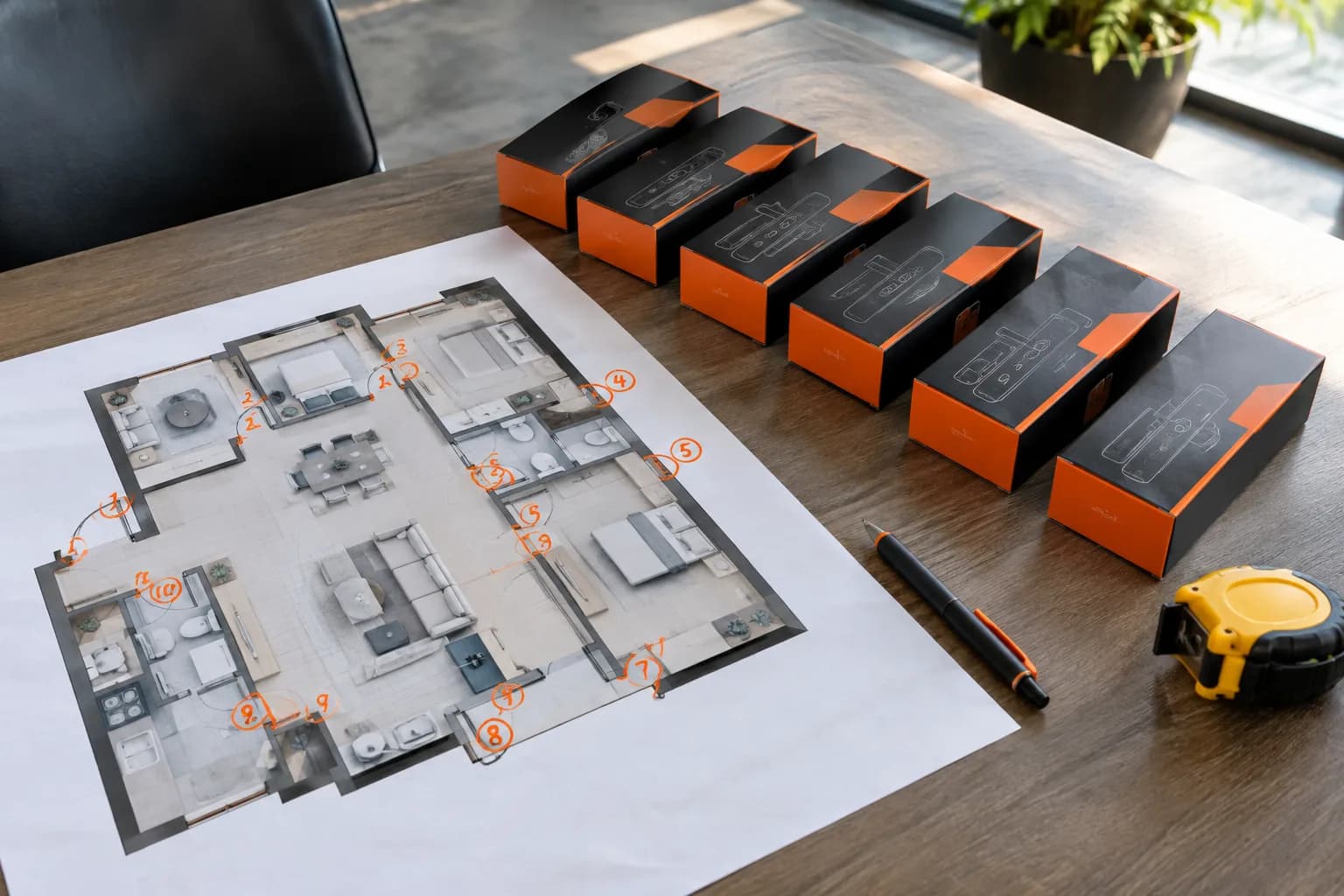
When you plan a door hardware kit for new flat doors, count one kit for every hinged door. A typical 1BHK needs three kits (main door, bedroom, bathroom), a typical 2BHK needs five, and a typical 3BHK needs six or seven, depending on the number of bathrooms and whether the kitchen or a study has a hinged door. The main door and bathroom doors usually need different kits from bedroom doors, so count by door type, not just by total.
Getting the quantity right the first time saves a second trip to the hardware shop, avoids mismatched finishes across rooms and keeps your carpenter from waiting on site. Here is how to count, what to put on your list and what to check before you buy.
How to count a door hardware kit for new flat orders
Start with the floor plan from your builder, not a guess. Go through it room by room and mark every door that swings on hinges. Then sort the doors into three groups:
- Main entrance door: heavier and thicker, needs stronger locking and usually a different look.
- Bedroom and internal doors: bedrooms, study, pooja room, and the kitchen if your layout has a hinged kitchen door.
- Bathroom and toilet doors: often lighter flush, PVC or WPC doors that face daily moisture.
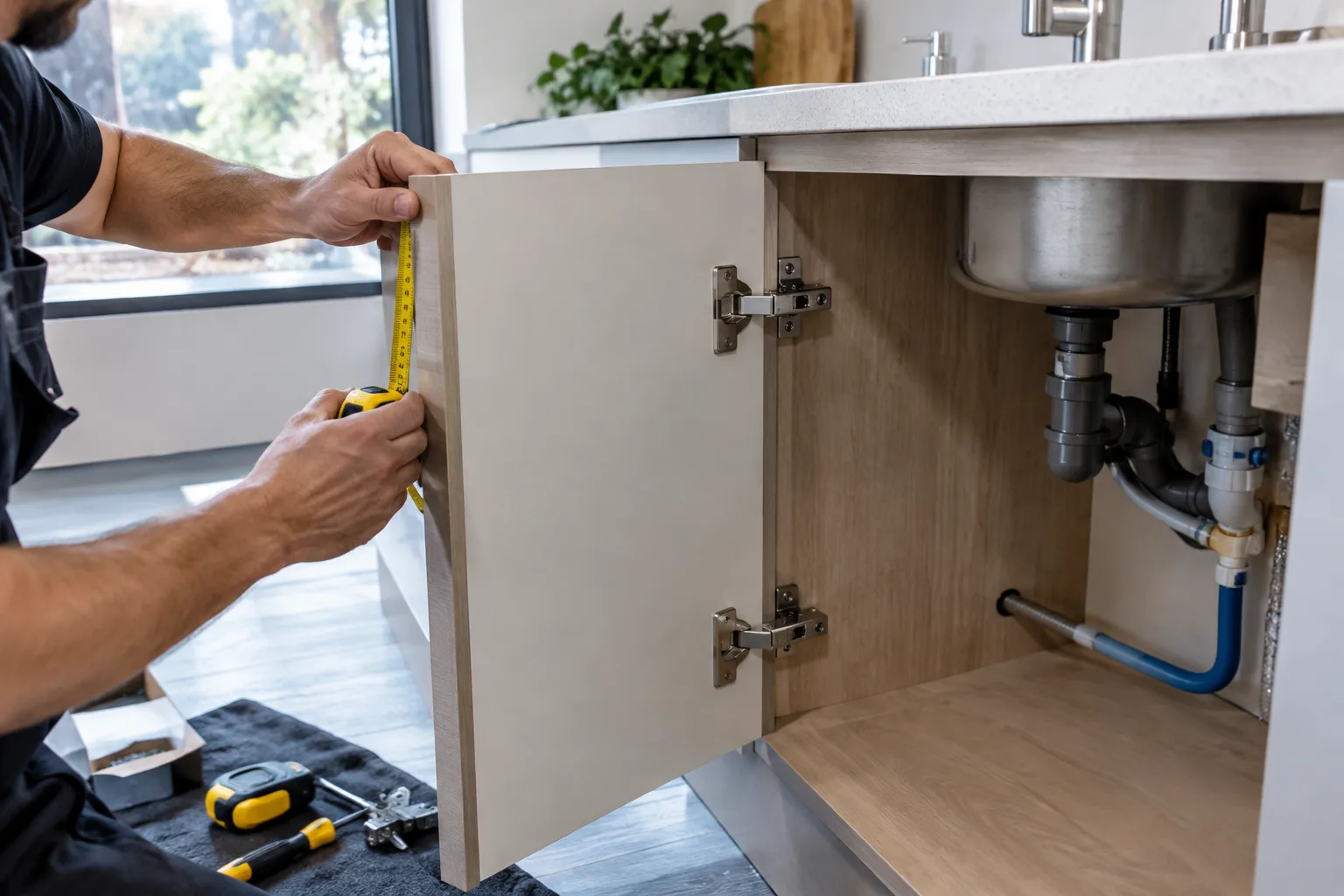
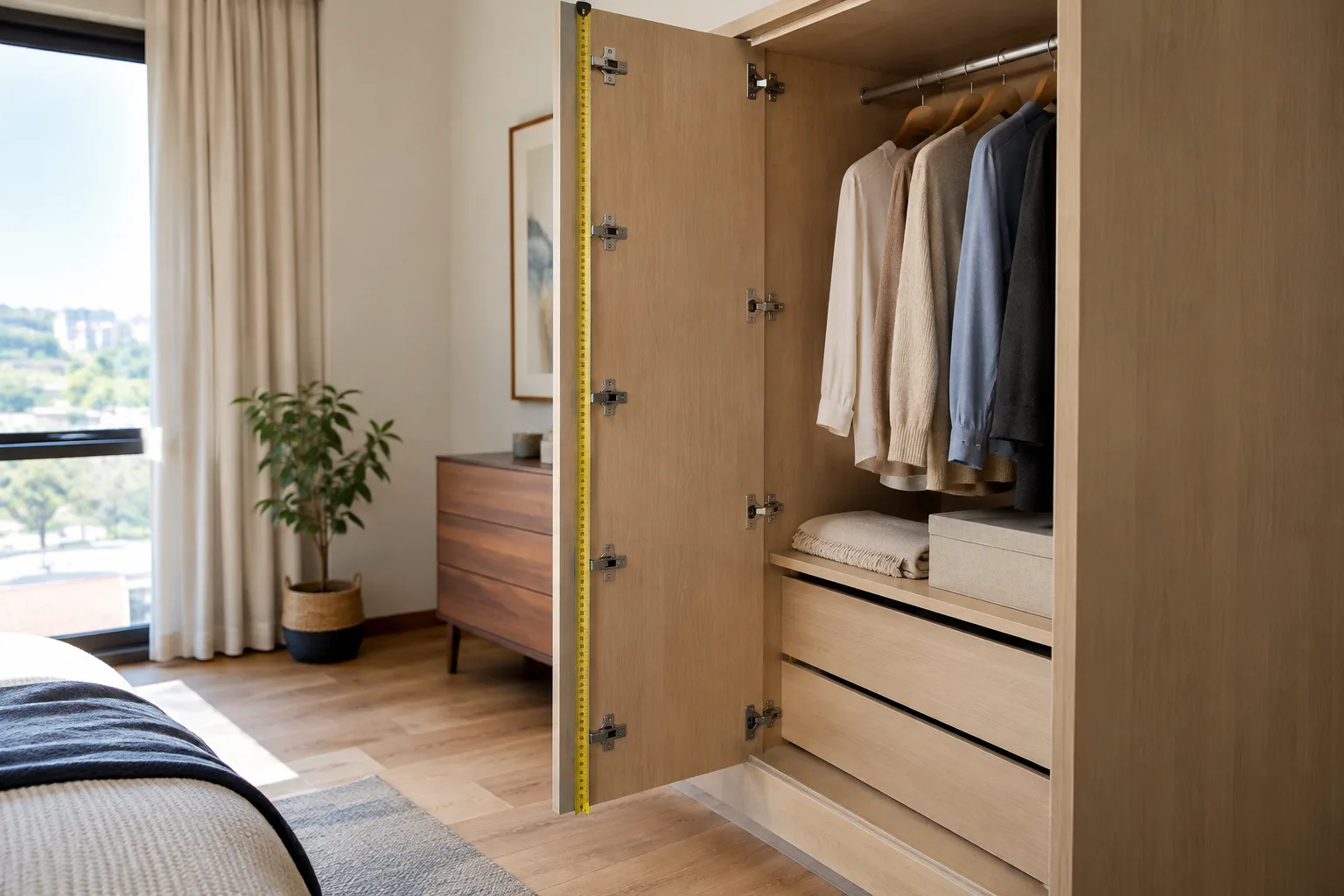
Leave out sliding balcony doors and windows. Aluminium and uPVC sliding systems normally come with their own fittings from the fabricator. Wardrobe and kitchen cabinet shutters fall under furniture hardware, so plan those separately with cabinet hinges and handles.
Door-by-door order lists for 1BHK, 2BHK and 3BHK flats
These lists follow common layouts in new residential projects around Pune, from Kharadi and Wagholi to Wakad and Hadapsar. Check them against your own plan, because layouts vary from project to project.
1BHK: usually 3 kits
- 1 main door kit
- 1 bedroom door kit
- 1 bathroom door kit (add one more if the toilet and bath are separate rooms)
2BHK: usually 5 kits
- 1 main door kit
- 2 bedroom door kits
- 2 bathroom door kits (one attached, one common)
- Add 1 internal door kit if the kitchen has a hinged door
3BHK: usually 6 to 7 kits
- 1 main door kit
- 3 bedroom door kits
- 2 or 3 bathroom door kits, depending on how many bedrooms have attached bathrooms
- Add internal door kits for a kitchen, study or pooja room door
A practical tip: add a spare packet of screws and a spare tower bolt to every order. Small parts go missing on site, and matching the exact material and finish later is harder than buying it now.
What a complete door hardware kit usually contains
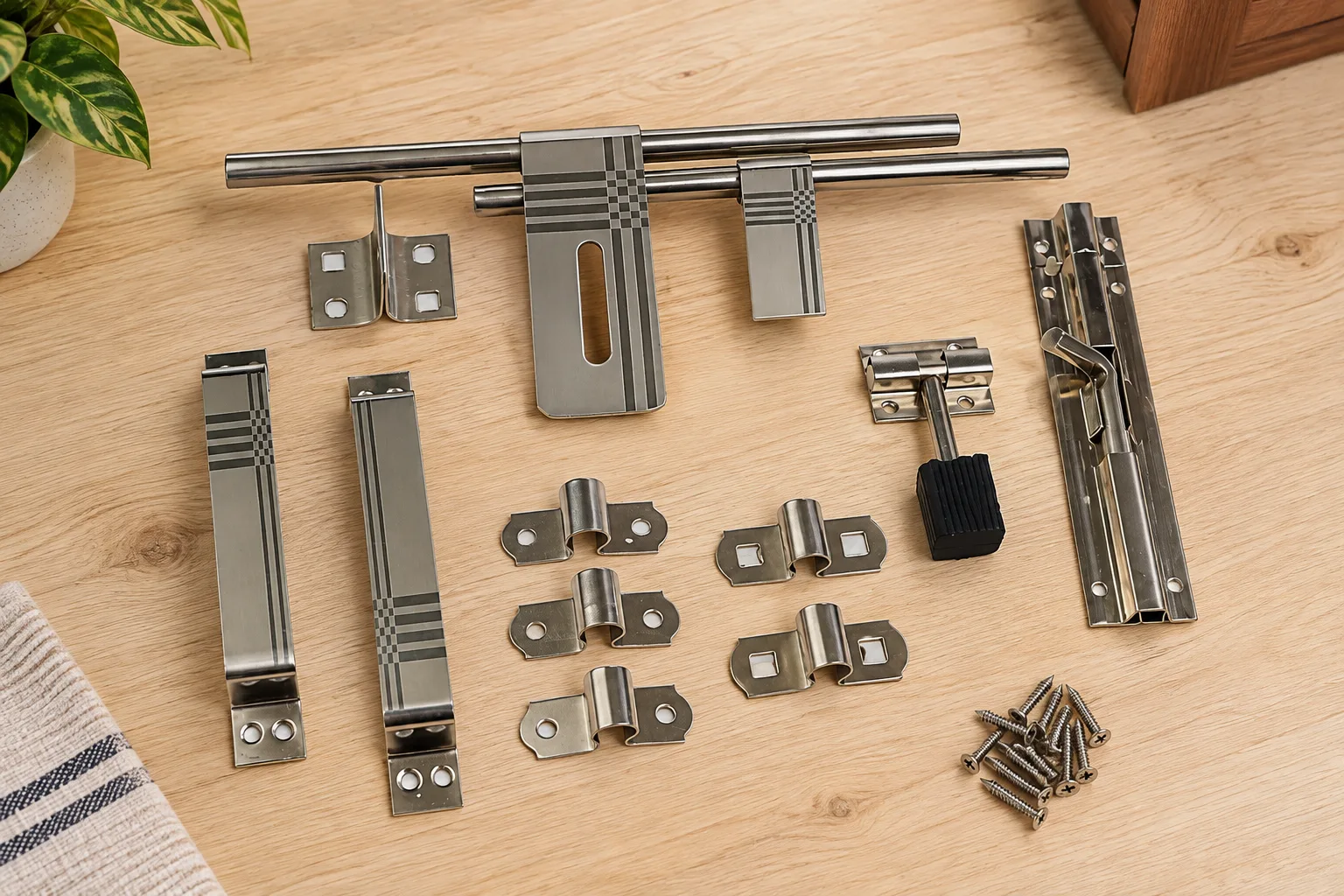
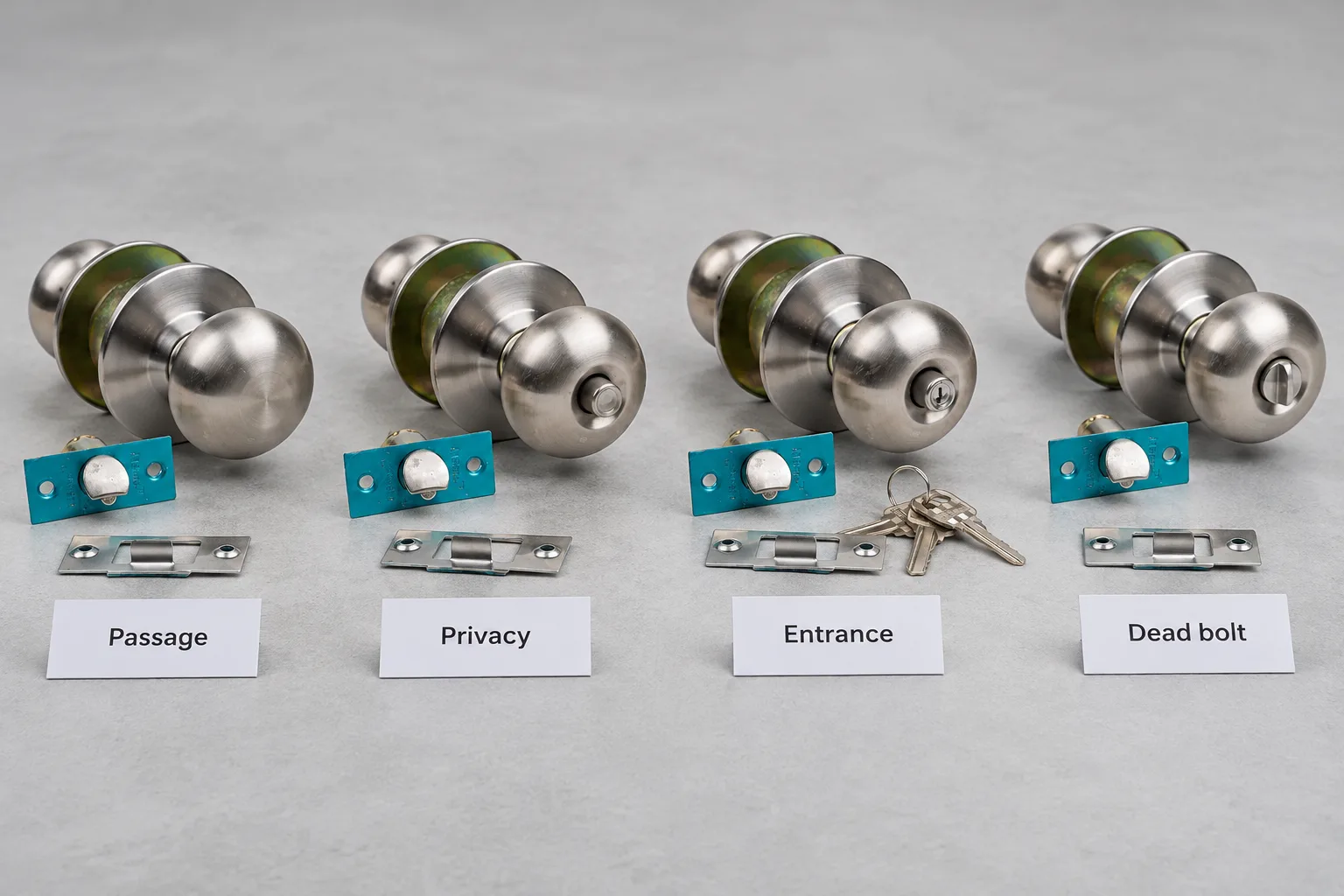
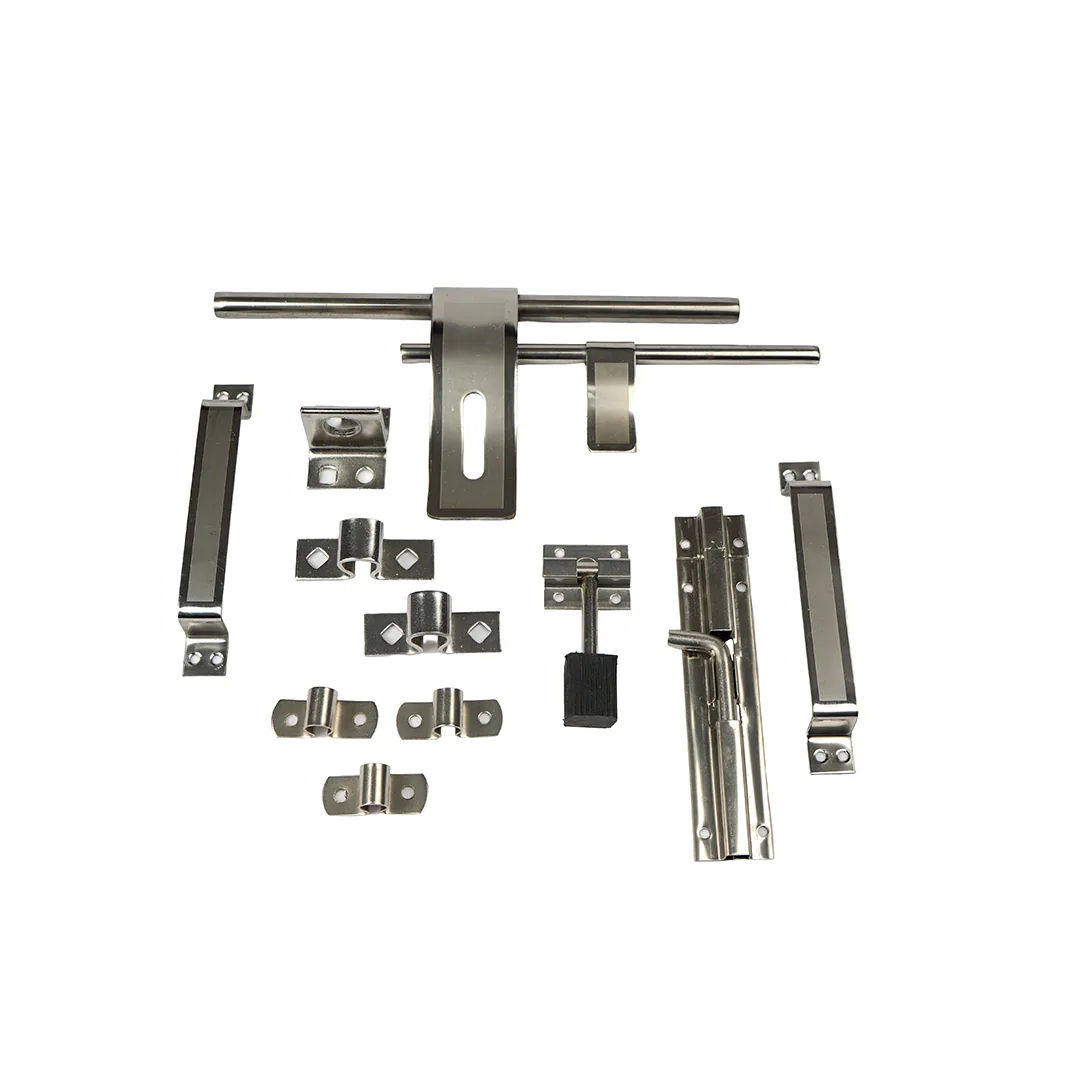
Door hardware kits are sold as a matched set of hardware fittings for one door, so the carpenter has everything in one box. Contents vary between brands and kit types, but a complete door hardware kit commonly includes:
- A pair of door handles, one for each side of the door
- Hinges, typically three for a standard internal door
- Tower bolts for locking from inside
- An aldrop for padlocking, more common on main and storeroom doors
- A door stopper or door holder
- Hardware screws and fasteners for fixing the fittings
Always read the box contents instead of assuming. Some door fitting kits leave out hinges or screws, and some include a lock or latch while others do not. You can compare configurations, product dimensions, material and finish options in the LUMA door kits range. If you only need to add or replace one piece, loose aldrops, tadi and patti handles let you buy components individually.
Why the main door and bathroom doors need different kits
Main door
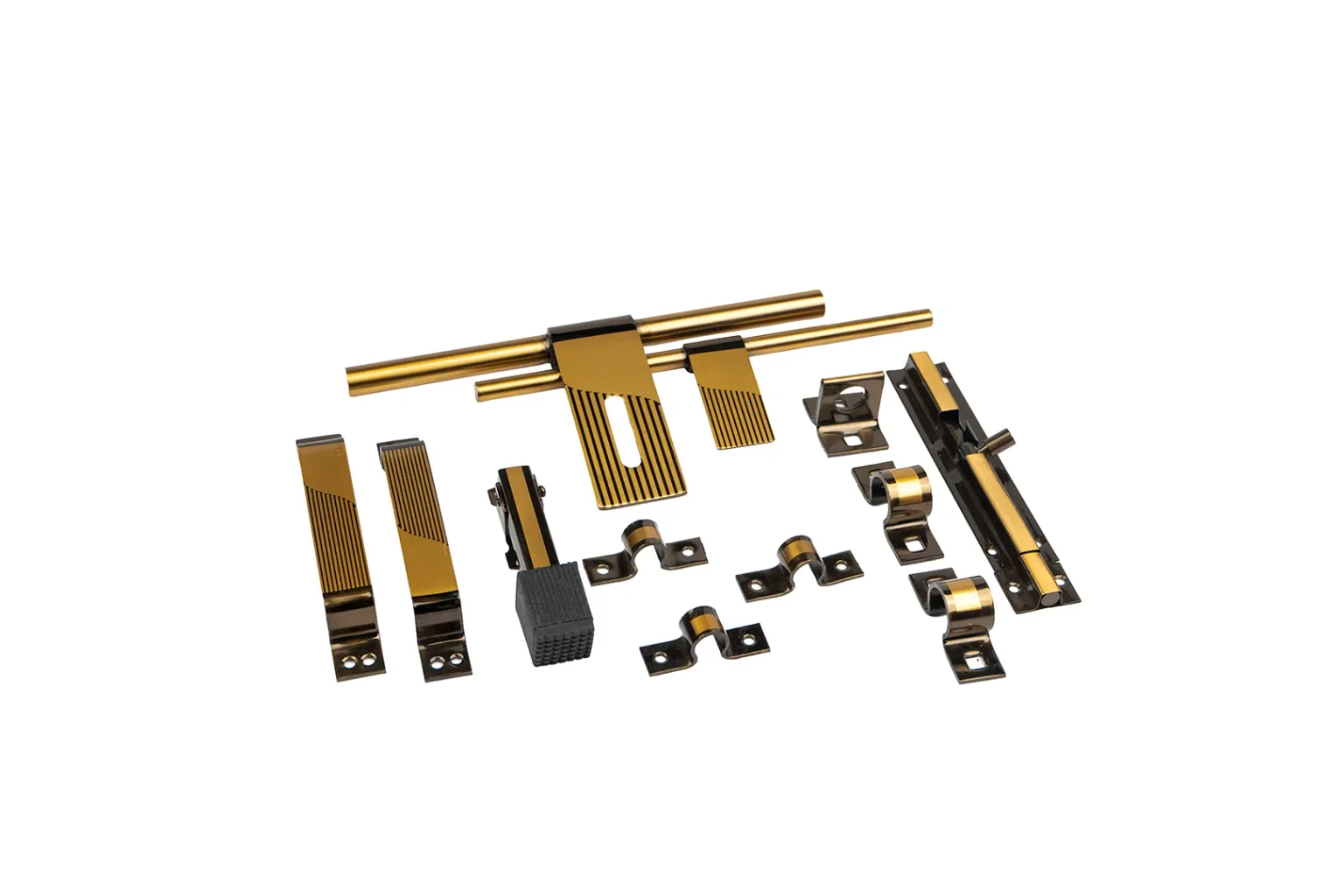
The main door is usually thicker and heavier than internal doors, and it gets the most use. A common carpentry practice is to fit four hinges instead of three on heavier doors to spread the load. Main doors also need a proper lock, a larger handle and often a safety chain or eyepiece, which a basic internal door fittings set does not cover. For options, see our guide to door handles and locks for main doors.
Bathroom doors
Bathroom doors deal with steam and splashing every day. Choose fittings in a material suited to damp areas, such as stainless steel, and keep them light and simple for PVC or WPC doors. LUMA's stainless steel bathroom kits and mini kits cover these doors.
Bedroom and internal doors
These are the most straightforward. A standard kit with handles, three hinges, tower bolts and a stopper suits most flush doors. If you want doors to stay open in a cross breeze, add door magnets or door holders to your list.
Five checks before you place the order
Before you finalise any door hardware kit for new flat use, run through these points with your carpenter:
- Door type and thickness: confirm whether each door is solid wood, flush, PVC or WPC, and how thick it is. Screw length and hinge size depend on this.
- Hinge size: match hinge length to the door height and weight, and check what the frame has been prepared for.
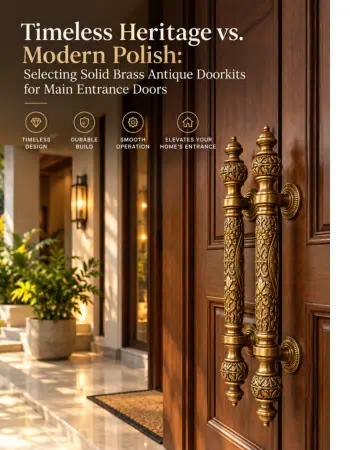
- One finish family: pick a single finish, for example stainless steel or brass antique, so handles look consistent from room to room.
- Opening direction: note which way each door opens and where tower bolts and stoppers should sit.
- Product specifications: read dimensions and material on the box or in the catalogue. For reference, the Bureau of Indian Standards covers steel butt hinges under IS 1341 and door handles under IS 208. If this matters for your project, ask which standard, if any, a product is tested to.
Buying door hardware kits for your new flat in Pune
Most owners buy door hardware in one go, just after possession and before the carpenter starts fixing shutters. Bring your door count, door types and preferred finish to the hardware counter so the retailer can put the complete order together. Carpenters and interior contractors handling several flats in one society can use the same lists, multiplied by the number of units.
LUMA Hardware is building direct relationships with hardware retailers across Pune, from Kondhwa and Handewadi to Baner and Sinhagad Road, so you can see kits in person before buying. To find a LUMA retailer near your site or ask about availability for a larger order, get in touch with the LUMA team.
Frequently asked questions
How many hinges does one door need?
A standard internal door usually takes three hinges. Heavier or thicker doors, such as most main entrance doors, are commonly fitted with four to spread the load. Check how many hinges your kit includes before ordering extras.
Can I use the same door kit for the main door and bedroom doors?
You can match the finish, but the main door usually needs more than a bedroom kit offers. It typically needs a proper lock, a larger handle and often a fourth hinge. Plan a separate main door kit and use standard kits for bedrooms.
Do door hardware kits include screws?
Many door hardware kits include screws, but not all do. Check the box contents, and make sure the screw length suits your door and frame thickness. Buying a spare packet is a good idea for any new flat fit-out.
When should I buy door kits for a new flat?
Buy them once door frames and shutters are finalised and before your carpenter starts fixing doors. Buying all kits together keeps the finish consistent across rooms and avoids delays on site.
Where can I buy LUMA door hardware kits in Pune?
LUMA products are sold through hardware retailers, and the retailer network in Pune is growing. Contact the LUMA team with your location and they can point you to a nearby retailer or help with availability for larger orders.