Hardware Distributorship or Direct Retail Partnership? Stock Mix, MOQs and Margins
- Category
- Drawer Hardware
- Published
- Reading time
- 7 min read
Overview
A hardware distributorship traditionally means a business buys large volumes from a brand and resells them to shops in a territory. A direct-to-retail partnership removes that middle layer. The retailer deals with the brand itself, agrees a starter stock mix, orders within the supplier's minimum order quantities and earns margin on the gap between trade price and shelf price. To begin, you request a price list by sharing your shop details, GSTIN and the product categories you want to carry.
This guide explains each part of that process, using the way LUMA Hardware works with retailers in Pune as a practical example.
Hardware distributorship vs a direct-to-retail partnership
In the classic model, hardware moves from brand to distributor, sometimes on to a sub-dealer, and then to the shop counter. Each layer adds handling, credit terms and its own margin. For a retailer, that can mean less visibility on product specifications, slower answers on availability and a price that has already been marked up more than once.
A direct to retail hardware supplier works differently. The brand builds the relationship with the shop owner, shares product information directly and plans supply around what actually sells at that counter. LUMA follows this retailer-first approach. As the brand puts it, "LUMA is building relationships with hardware retailers who want to introduce the brand to their customers." The products themselves still serve everyone who walks into a hardware shop: homeowners, carpenters, furniture makers, fabricators and interior contractors.
If you are searching for hardware wholesalers near me because you want better terms or a more reliable source, it is worth comparing both routes. Our overview of hardware wholesalers in Pune explains how the different supply options compare locally.
How a LUMA retail partnership works, step by step
- Enquiry. You share basic details about your shop, its location and the customers you serve.
- Catalogue and price list. LUMA shares the product catalogue with product specifications, product dimensions and available material and finish options, along with trade pricing for the categories you are interested in.
- Stock mix discussion. Together you shortlist a starter range that suits your customer base, whether that is carpenters, contractors, modular kitchen workshops or walk-in homeowners.
- First order. You place an order within the applicable minimum quantities and confirm invoicing and delivery details.
- Reorders and range expansion. As you learn what moves, you top up fast sellers and add new categories as they are introduced to the approved catalogue.
Building the right stock mix
A good stock mix balances fast-moving consumables with higher-value items that increase the size of each bill. The right mix for a shop near Bhosari MIDC, which sees fabricators and industrial buyers, will look different from a counter in Baner or Wakad serving interior contractors and homeowners.
Screws and fasteners: the daily movers
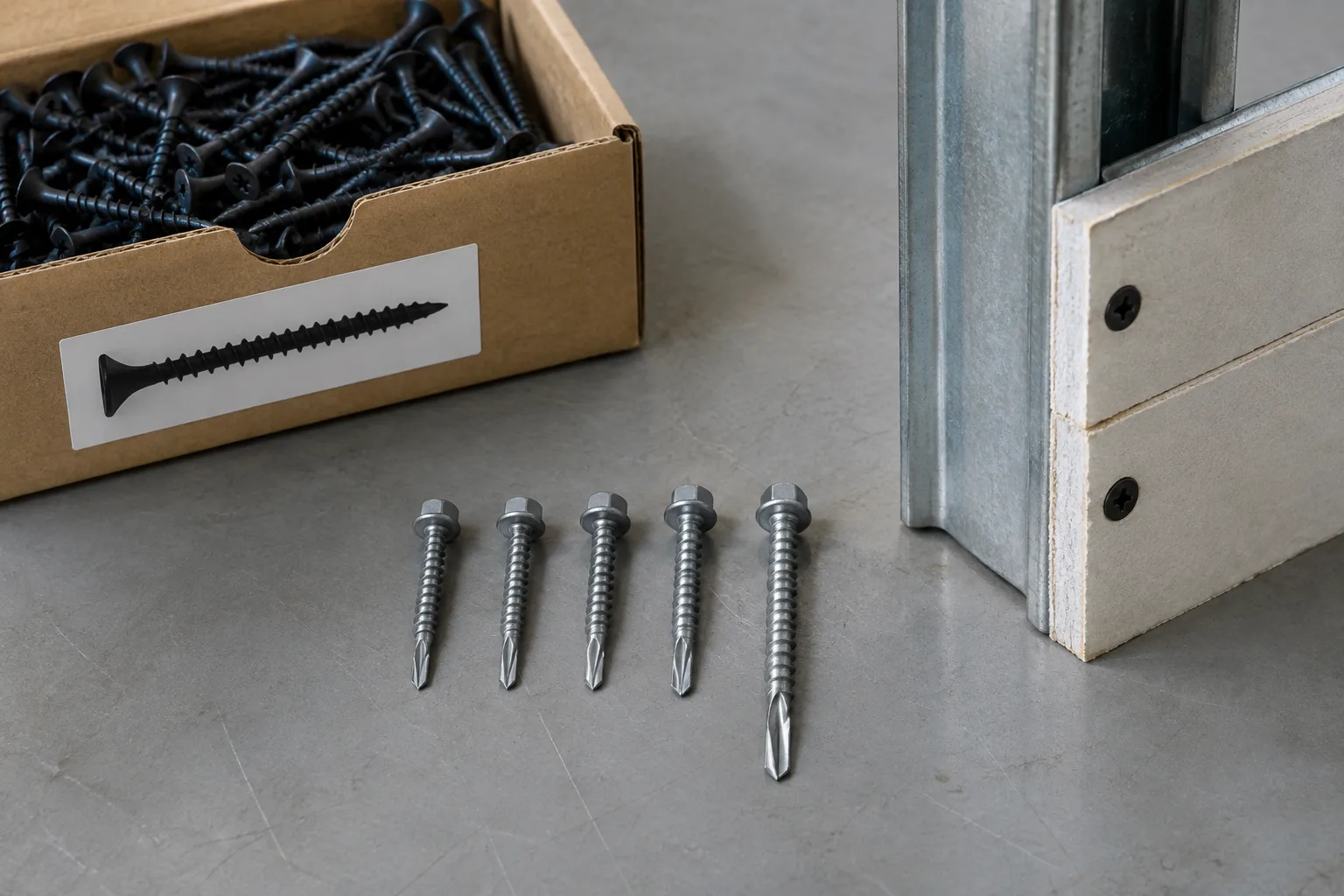
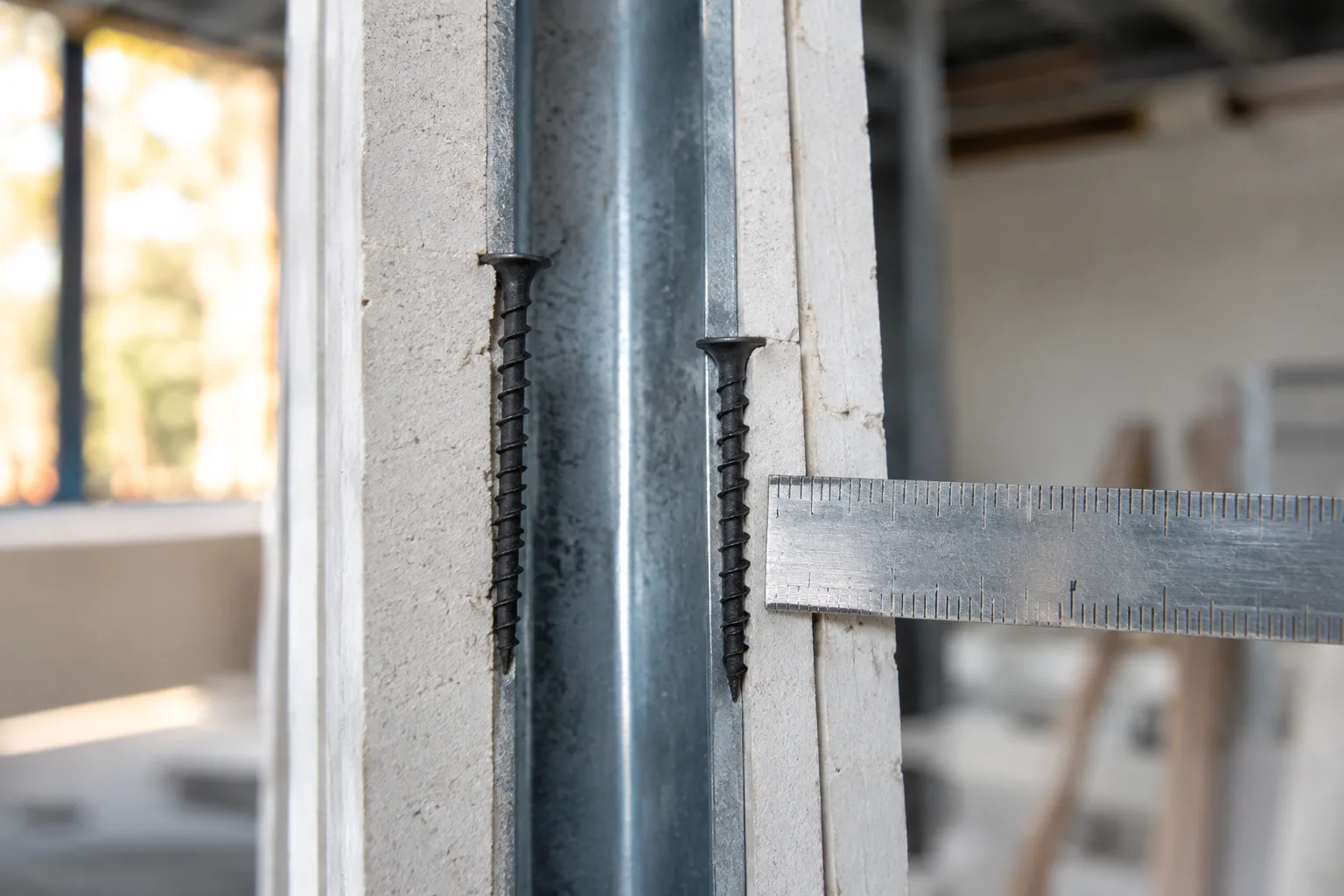
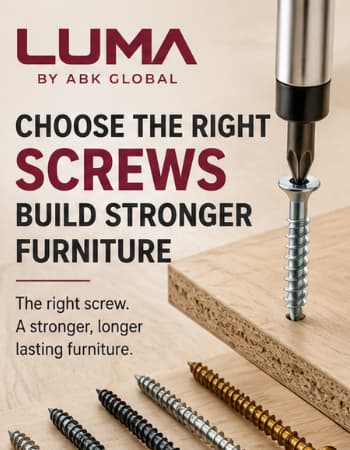
Hardware screws and fasteners are bought often and in quantity, which makes them the base of most hardware supplies wholesale orders. Stock the sizes your trade customers ask for repeatedly, and cover different applications: wood screws for furniture, drywall screws for partition work and self-drilling screws for metal framing. Self-drilling screws are commonly sold by point type (labelled S, 1, 2 and 3) matched to the thickness of the metal being fixed, so a clear spread of point types helps you serve fabricators correctly. You can check sizes and details in LUMA's screw technical specifications.
Cabinet hinges and door hinges
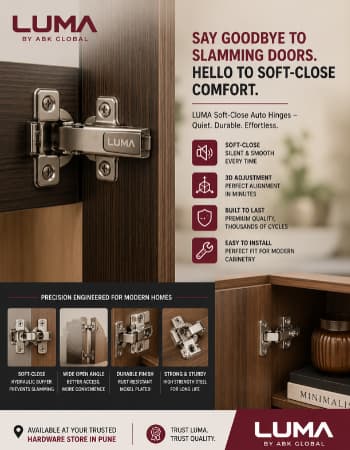
Cabinet hinges are a steady seller wherever modular furniture is being made or fitted. Many customers now ask specifically for soft-close hinges, while carpenters working to a budget still buy regular auto hinges. LUMA's hinge range includes MS regular, MS soft-close and SS soft-close auto hinges, which lets a retailer offer a clear good, better and best choice at the counter. Door hinges round out the category for builders and door installers.
Door hardware kits and locks
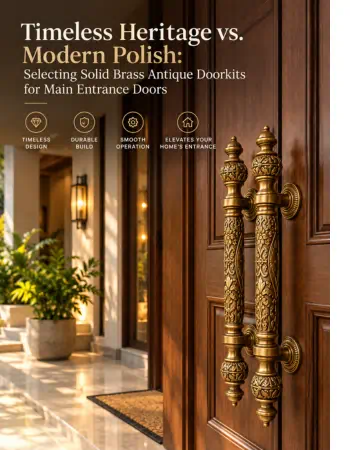
Door hardware kits are a higher-value line. A kit groups the fittings a door needs, which makes the sale simpler for a homeowner and quicker for a contractor fitting several doors on one site. LUMA's stainless steel and brass door kits suit residential projects across Pune, and pairing them with cylindrical tubular locks gives customers a complete answer for internal doors.
Supporting lines
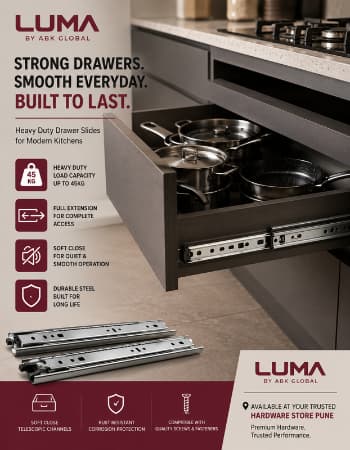
Towerbolts, bathroom kits and drawer channels fill out the range. They may not move every day, but having them on the shelf stops a customer walking to the next shop for one missing item.
Minimum order quantities: what to expect
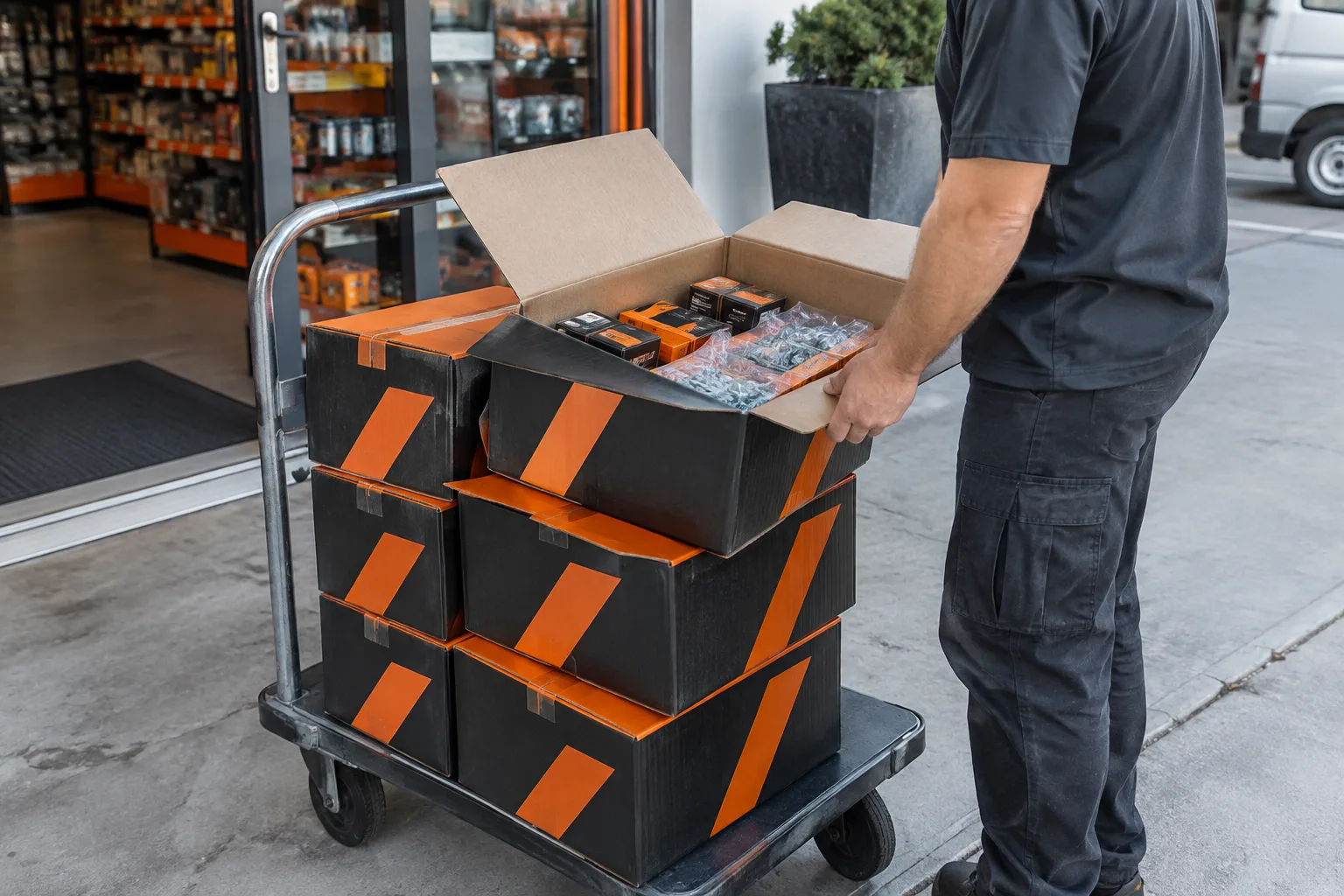
A minimum order quantity (MOQ) is the smallest order a supplier will process, set either per product or per total order value. MOQs exist because packing, invoicing and transport carry a fixed cost on every dispatch. For an architectural hardware bulk supplier, very small orders are expensive to serve. For a retailer, very large MOQs lock up cash in slow-moving stock. A fair arrangement sits between the two.
When you speak to any supplier, ask:
- Is the MOQ set per item, per box, per category or per total order value?
- Can you mix sizes and finishes within one carton to reach the minimum?
- Are first-order minimums different from reorder minimums?
- How are delivery charges handled for smaller top-up orders?
LUMA confirms current minimums when sharing the price list, since they depend on the product category and pack sizes in the approved catalogue.
Understanding margins without guesswork
Margin is the share of the selling price you keep after covering what the product cost you. Calculate it on landed cost, not just the figure on the price list. Include freight and handling, and account for how GST affects your cost if you are registered.
A simple formula: margin % = (selling price minus landed cost) divided by selling price, multiplied by 100. Margin and markup are not the same thing. A 25% markup on cost gives a 20% margin on the selling price, so always check which figure is being discussed.
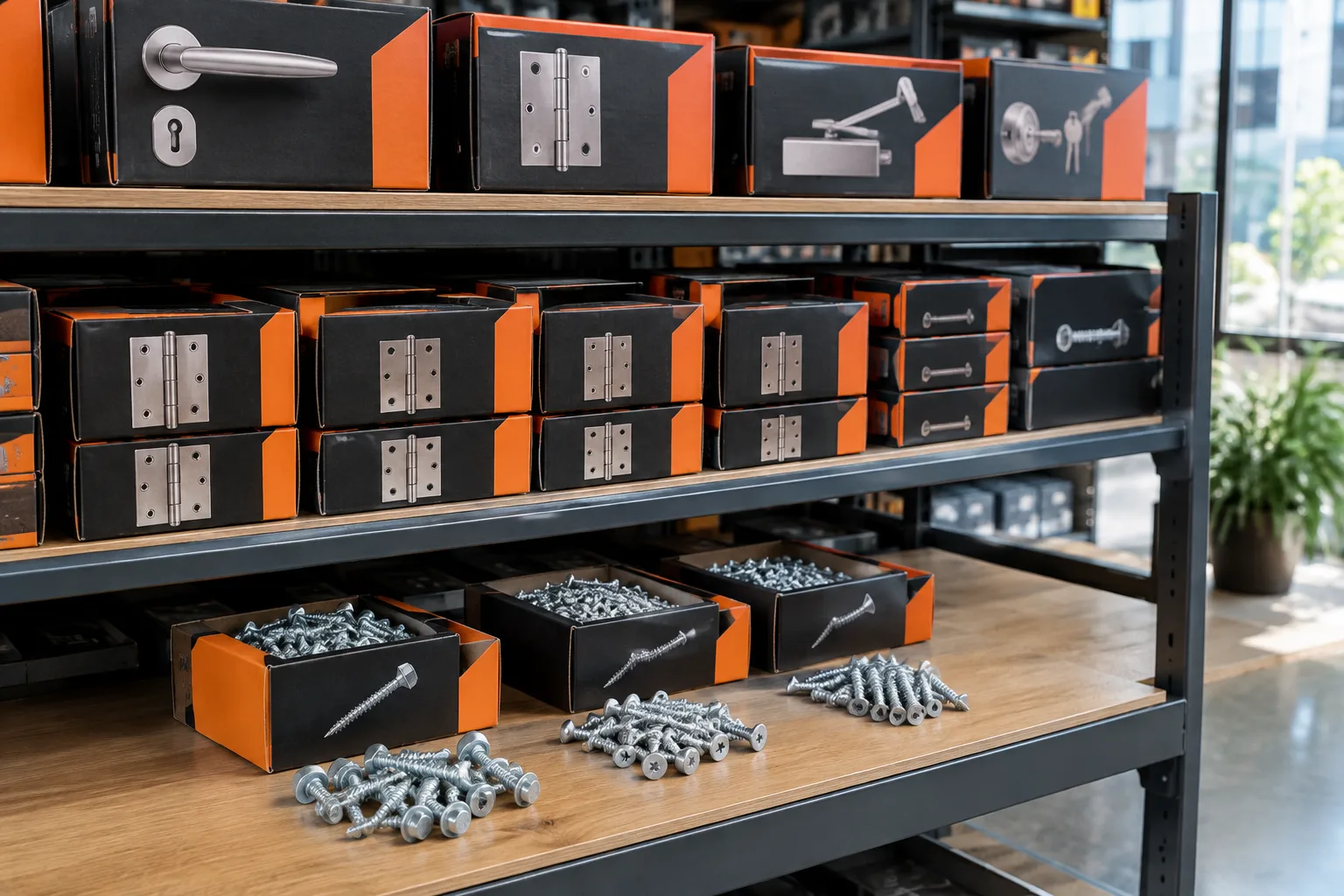
Margins also depend on how a product sells. Screws earn through volume and repeat purchases. Door kits and soft-close hinges earn more per sale but turn over more slowly. A healthy stock mix uses both. Clear packaging helps too: LUMA's charcoal black and orange packaging is designed to be recognisable on the shelf, so customers can ask for the brand by name.
How to request a price list from a direct-to-retail supplier
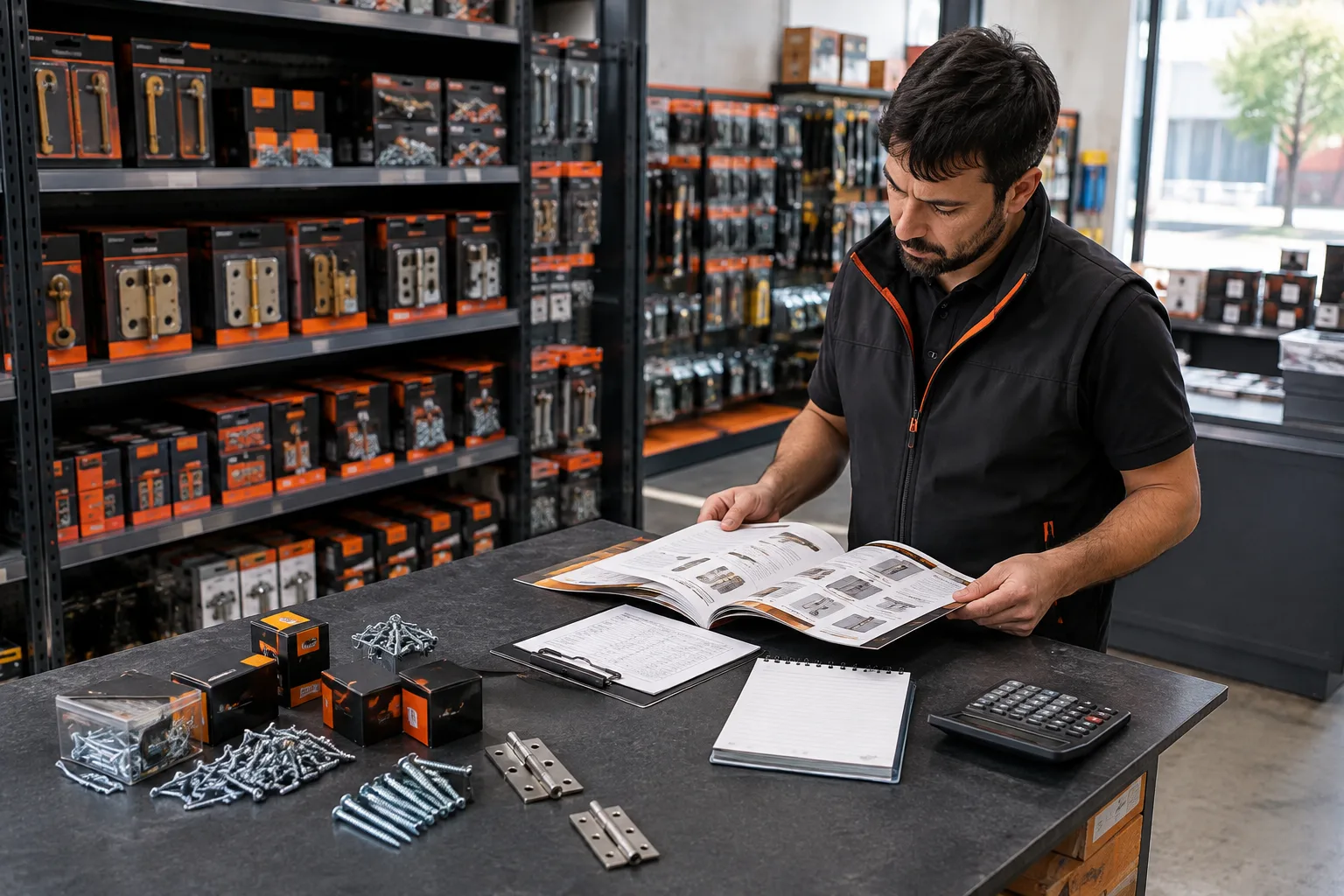
A complete request gets a faster, more accurate reply. Include:
- Shop name, contact person and phone number
- Full address and area (for example Hadapsar, Kondhwa or Raviwar Peth)
- GSTIN, if registered
- The type of customers you serve most
- Product categories of interest, such as screws, hinges, door kits or locks
- A rough idea of the monthly volume you expect
Sharing your GSTIN matters. Under Section 16 of the Central Goods and Services Tax Act, 2017, a registered business can claim input tax credit only when it holds a valid tax invoice for the purchase, so your supplier needs your GST details to invoice you correctly from the first order.
Retail partnerships across Pune
LUMA is based in Handewadi and is building relationships with hardware retailers across Pune, from the established hardware lanes of Raviwar Peth to growing counters in Kharadi, Wagholi, Magarpatta and PCMC. If you are weighing up a hardware distributorship against a direct relationship with the brand, the simplest way to decide is to see the catalogue and trade terms side by side.
To become a LUMA retail partner or request a price list, send a retailer partnership enquiry with your shop details and the categories you would like to explore.
Frequently asked questions
What is the difference between a hardware distributorship and a direct retail partnership?
A hardware distributorship places a distributor between the brand and the shop, and that distributor resells to retailers in a territory. In a direct retail partnership, the retailer orders from and deals with the brand itself. This usually means clearer product information and fewer layers between the brand and the counter.
Does LUMA have a minimum order quantity for retailers?
Minimum quantities depend on the product category and the pack sizes in the approved catalogue. LUMA confirms the current minimums when it shares the price list, so you know exactly what a first order and a reorder involve before you commit.
What margin can a hardware retailer expect on LUMA products?
Margins vary by category, pack size and your own selling price, so there is no single figure. Once you have the trade price list, calculate margin on your landed cost, including freight and GST treatment, and compare fast-moving lines like screws with higher-value lines like door kits.
Can homeowners and carpenters buy LUMA hardware?
Yes. LUMA builds its supply around hardware retailers, and homeowners, carpenters, furniture makers and contractors buy the products through those retail counters. As the retailer network grows, LUMA plans to make it easier to find a LUMA retailer near you.
What details should I share when requesting a LUMA price list?
Share your shop name, contact person, address and area, GSTIN if registered, the customers you mainly serve and the categories you are interested in. A rough idea of expected monthly volume also helps LUMA suggest a suitable starter stock mix.