Self Drilling Screw Point Types (S, 1, 2, 3): Which Sheet Thickness Each One Handles
- Category
- Screws & Fasteners
- Published
- Reading time
- 7 min read
Overview
Self drilling screw point types are graded by how much steel the drill tip can cut through before the thread starts to engage. An S point pierces thin light-gauge steel without drilling. A #1 point drills very thin sheet, a #2 point handles light-gauge sheet and sections, and a #3 point is for thicker sections and fabricated frames. Choose the point by the combined thickness of every layer you are fastening, not by the top sheet alone.
This guide is for fabricators, roofing and cladding contractors and retailers who buy by the box or the carton and need the right point first time. LUMA supplies direct-to-retail from Handewadi Trade Market, Pune, with no distributor in between, so the spec questions below go straight to the people who hold the stock.
Self Drilling Screw Point Types at a Glance
The thickness figures below are typical drilling capacities as commonly published across the fastener industry. Exact ratings vary by manufacturer and by screw diameter, so check the capacity listed against the size code before you commit a bulk order.
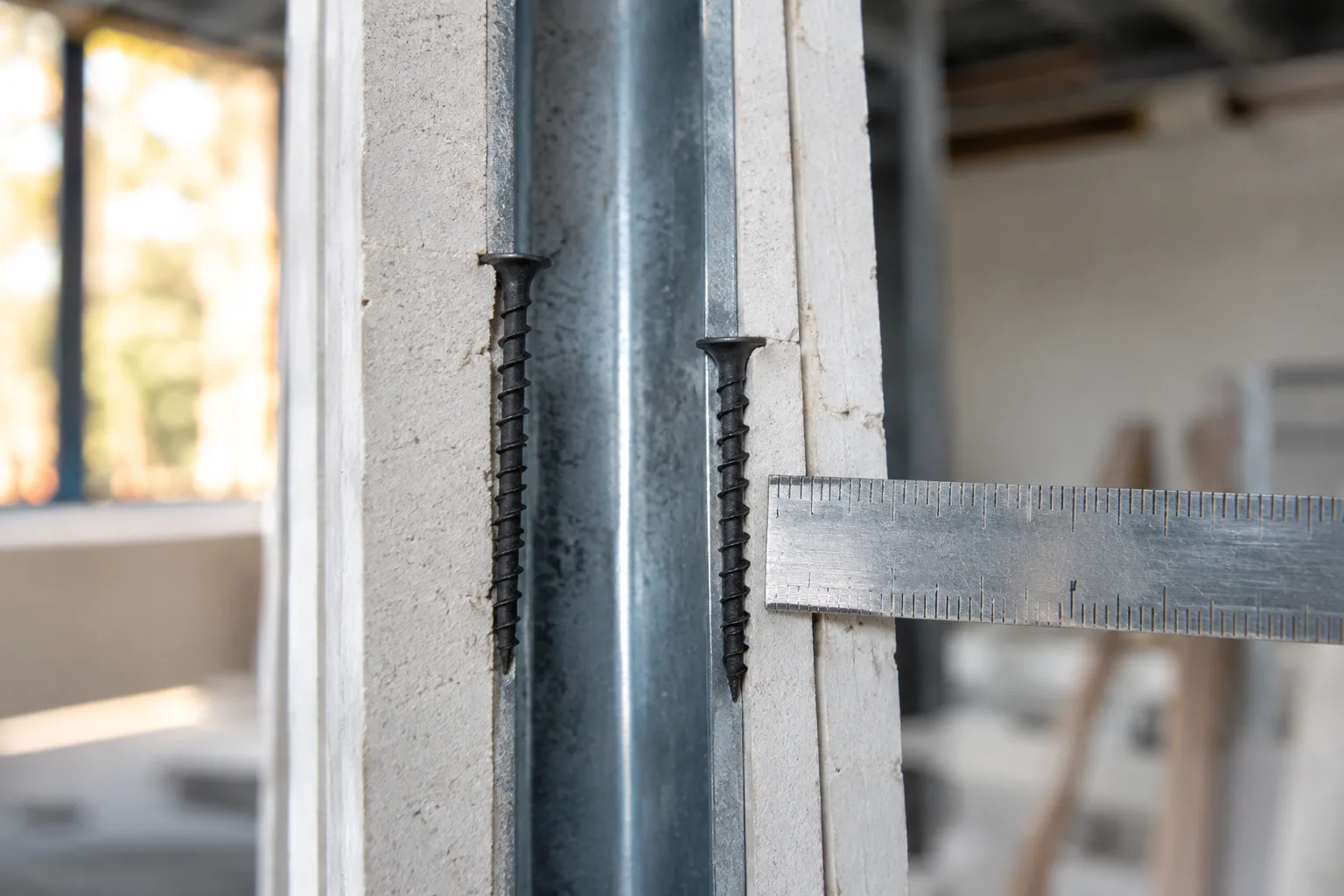
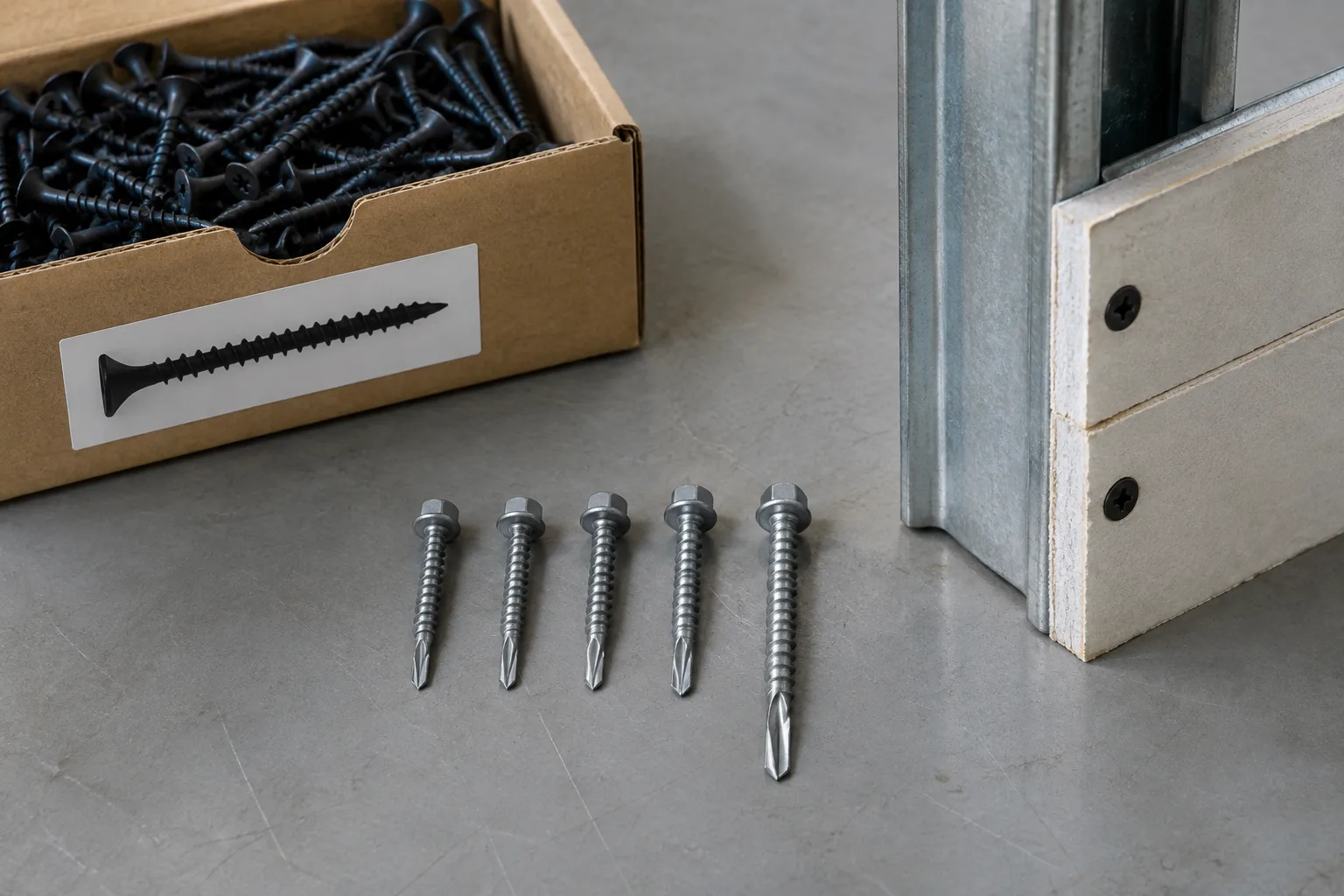
- S point (sharp): a needle point with no drill flute. It pierces thin light-gauge steel such as metal studs and track. This is the point you will see on drywall screws used for steel framing.
- #1 point: a short drill tip for very thin sheet, typically up to about 0.9 mm total thickness.
- #2 point: the general-purpose drill point, typically rated up to about 2.5 mm total. It covers most sheet-to-light-section and sheet-to-sheet joints.
- #3 point: a longer flute for heavier work, typically rated up to about 4.5 mm total. Used on thicker sections, angles and fabricated frames.
- #4 and #5 points: longer flutes again, for structural steel and heavy plate. Specify these separately. A #3 forced into structural steel will overheat and dull before it finishes the hole.
Two published standards describe these screws as a complete system of point, thread and head: ISO 15480 covers hex washer head drilling screws with tapping screw thread, and DIN 7504 is the German standard for drilling screws with tapping screw thread. Both treat the drill point and the thread as one design, which is why point type, diameter and length should always be specified together.
How to Measure Thickness for the Right Point
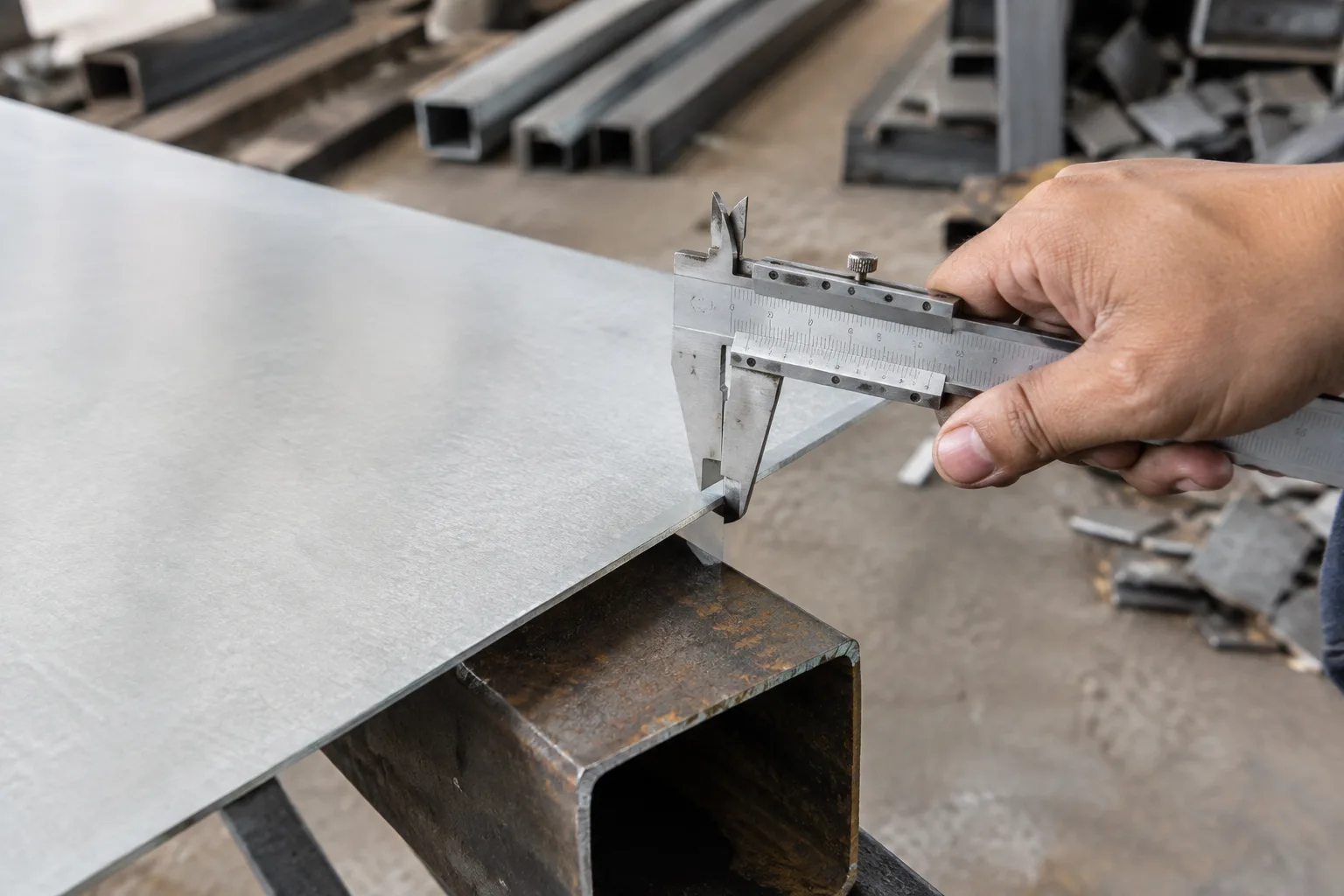
The number that matters is total material thickness: the top sheet, the section underneath, and any gap between them. A 0.5 mm roofing sheet sitting on a 2 mm purlin is a 2.5 mm job, not a 0.5 mm job.
The working rule behind every point rating is simple. The drill section (the flute) must cut fully through all layers before the first thread reaches the steel. If the thread engages while the tip is still drilling, the thread pitch tries to pull the screw forward faster than the tip can cut. The result is a snapped point, a stripped hole or a screw that stalls halfway.
Going the other way, a longer point than the job needs will still drill, but it is slower, leaves more tip protruding behind the joint, and is usually wasted cost on thin sheet. For bulk buying, that difference adds up across thousands of pieces.
- Measure or confirm the thickness of every layer from the drawing or the section spec.
- Add them together, including any gap or spacer.
- Pick the smallest point whose rated capacity comfortably covers that total.
- Check that the screw length leaves enough thread engagement after the point has passed through.
S Point: Thin Steel and Drywall Framing
The S point does not drill. It pierces, pushing through thin steel and forming its own hole as the thread follows. That makes it fast on light-gauge studs and track used in partitions and false ceilings, where interior contractors are fixing gypsum board at volume.
Once the stud gets heavier, an S point starts to skate or stall, and a drill point drywall screw is the better choice. For length, gauge and thread selection on board-to-stud work, see our guide to drywall screw sizes and thread types. Retailers and drywall screw suppliers stocking for interior trade should carry both piercing and drill-point versions, because contractors will ask for each.
#1 and #2 Points: Light-Gauge Sheet and Sections
The #1 point is a niche choice for very thin sheet-to-sheet work, such as light ducting and thin panel stitching, where a longer flute would be unnecessary.
The #2 point is the workhorse. It covers sheet onto light purlins, sheet-to-sheet laps, light angle and channel, and most enclosure and panel fabrication. For workshops in Bhosari MIDC and PCMC turning out panels, enclosures and light frames, and contractors putting up sheds around Wagholi and Hadapsar, the #2 point will usually account for the largest share of a screw order. If you are unsure which point a job needs, the #2 is the one to sample first.
#3 Point: Heavier Sections and Fabricated Frames
Step up to a #3 point when the combined thickness moves past what a #2 is rated for. Typical jobs include fixing to heavier MS angle and channel, thicker tube walls, gate and grille frames, rack and shelving structures, and sheet fixed onto fabricated frames rather than light purlins.
On thicker steel, drive speed matters as much as point choice. A screw gun run too fast burns the tip before it cuts through. Lower speed with steady, straight pressure gives a clean hole and full thread engagement. If points are failing on site, check the total thickness first and the driving speed second before blaming the batch.
Matching Head Style to the Point
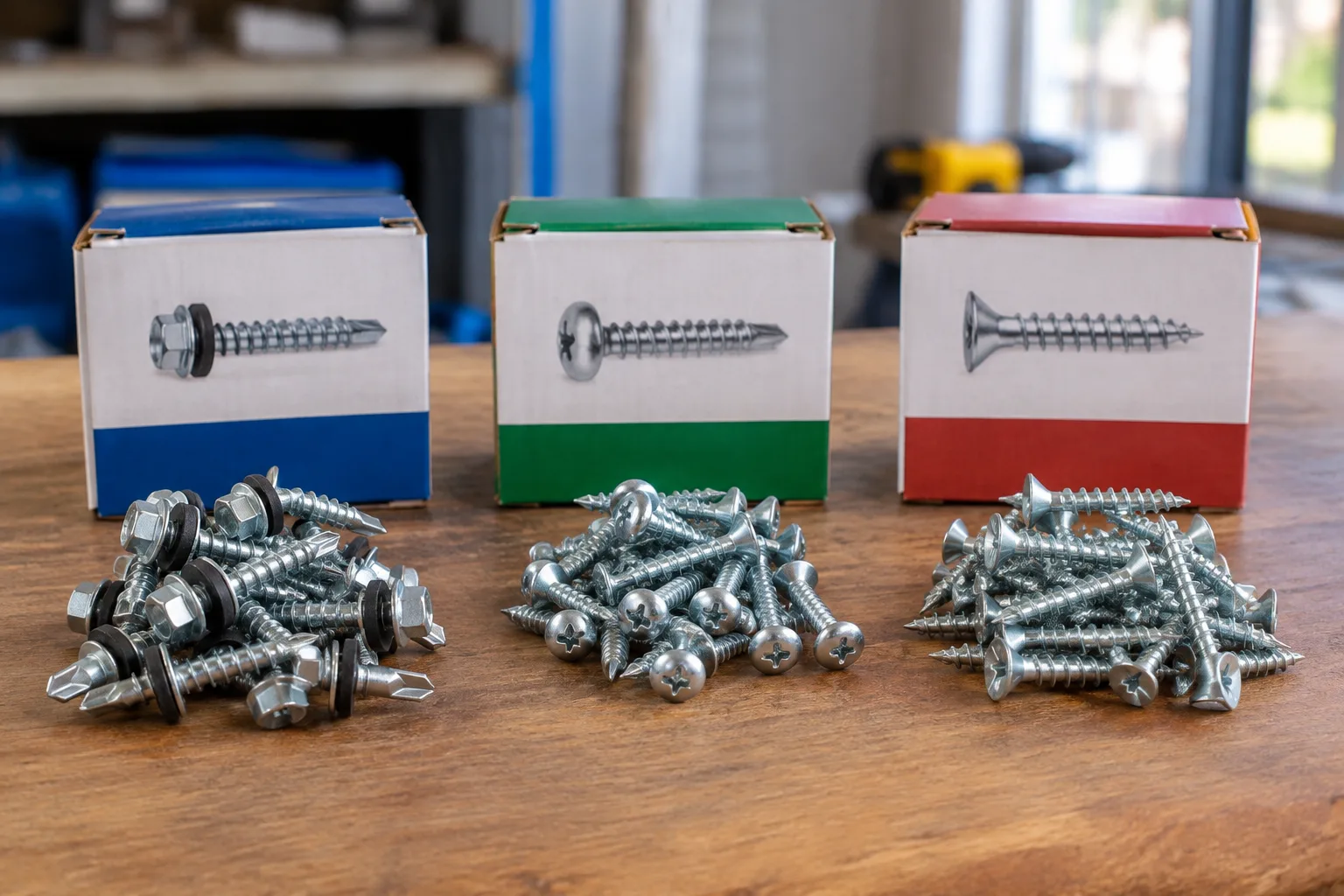
Point type decides what the screw can drill. Head style decides how it is driven and how it sits on the finished job.
- Hex head screws: driven with a socket, so they take high torque without cam-out. The usual choice for sheet-to-frame fixing on roofing, cladding and structural sections. See our hex head and truss head SDS screws.
- Truss head screws: a low, wide head that spreads the load over thin sheet and sits neatly on panels, enclosures and frame work where a hex head would stand proud.
- CSK (countersunk) heads: for a flush finish on hinge plates, aluminium sections and anything that has to sit flat. Our CSK self-drilling screws cover this work.
A fabricator buying for mixed jobs will typically need at least two head styles across two point types. Ordering them together from one self drilling screws supplier keeps the codes consistent across the shop floor.
Buying Self Drilling Screws in Bulk from LUMA
LUMA publishes its full range: 127 screw sizes and codes across 7 ranges, covering self-drilling, drywall, hex head, truss head and pan head screws. You can see the complete industrial, self-drilling and drywall screws range with sizes and codes before you enquire.
Because we sell direct-to-retail, retailers and contractors deal with us rather than a distributor, which gives better pricing control and higher retailer margins for shops that stock LUMA. Bulk and dealer enquiries are handled by the same team that holds the stock at Handewadi Trade Market, serving fabricators and trade buyers across Pune including Bhosari MIDC, PCMC, Kondhwa, Hadapsar, Kharadi and Wagholi.
To get a price, send the following:
- Point type (S, #1, #2, #3) or the total thickness you are drilling
- Diameter and length
- Head style (hex, truss, CSK, pan)
- Quantity per size
In our own words: "Send us the specification and quantities you need." Reach us on WhatsApp or by phone on +91 98674 35326, Monday to Saturday, with a same-day response. Or use our contact page to Request Pricing for your bulk order.
Frequently asked questions
Can I use a #3 point screw on thin sheet?
Yes, a #3 point will drill thin sheet, but it is slower and usually costs more per piece than the job needs. The real problem is the reverse: using a #2 point on steel thicker than its rated capacity, where the thread engages before drilling is finished and the screw snaps or stalls.
What does total or combined thickness mean when choosing a point?
It is the thickness of every layer the screw has to pass through, added together, including any gap between them. A thin roofing sheet over a heavier purlin is rated by the full stack, so the purlin thickness usually decides the point type.
Are S point drywall screws suitable for steel studs?
S point screws are made for thin light-gauge steel studs and track, where they pierce rather than drill. On heavier studs they tend to skate or stall, so a drill point drywall screw is the better choice.
Which head style should I order with self-drilling screws?
Hex head screws suit high-torque sheet-to-frame fixing on roofing and structural sections. Truss head screws sit low on panels and thin sheet, and CSK heads give a flush finish on hinge plates and aluminium sections.
How do I get a price for a specific point type, size and quantity?
Send LUMA the point type or total thickness, diameter, length, head style and quantity per size on WhatsApp or by phone at +91 98674 35326. Enquiries are answered the same day, Monday to Saturday, by the team that holds the stock.